
Choosing the right outdoor planter box in Singapore is the difference between a balcony garden that thrives for ten years and one that warps, leaks, or kills your plants in the first wet season. With most homes here being HDB flats or condos, you cannot dig into the ground – you garden in boxes. This guide walks you through materials, sizes, drainage, design ideas, and when a custom build beats off-the-shelf, all written for our tropical climate and the strata rules that come with it.
Why use an outdoor planter box in Singapore?
Singapore is a vertical city. Most of us garden on a balcony, terrace, rooftop or in a small landed corner where soil access is limited. A planter box solves four problems at once: it gives roots enough volume in a controlled space, it keeps soil off your slab so the BCA waterproofing layer stays intact, it can be moved when you renovate, and it shapes the visual story of an outdoor area in a way that stand-alone pots cannot.
For HDB and condo dwellers, planter boxes are also the only legal way to keep larger plants on a balcony. Loose soil on a balcony slab will eventually find a crack and cause a downstairs leak, which is why most management corporations require contained planting. A well-built outdoor planter box with a proper liner and drainage tray solves that risk completely.
Beyond compliance, the right planter visibly lifts the value of an outdoor space. Greenery softens hard balcony edges, reduces afternoon heat radiating off the slab, and gives birds and butterflies a reason to visit. A landscape that looks intentional starts with the box, not the plant.
Outdoor planter box materials compared
Five materials dominate the Singapore market. Each has a clear best-fit case. Below is the short breakdown, followed by a comparison table you can screenshot before shopping.
Chengal wood planter box
Chengal is a Southeast Asian hardwood that handles termites, wet weather, and direct sun better than almost any other timber sold here. A well-made chengal planter box will last 12 to 20 years outdoors with light annual oiling. Expect to pay a premium – $400 to $1,200 for a balcony-sized box – but it is the material professional landscape contractors specify when a client wants the warmth of wood without replacing the box every three years.
Concrete planter box
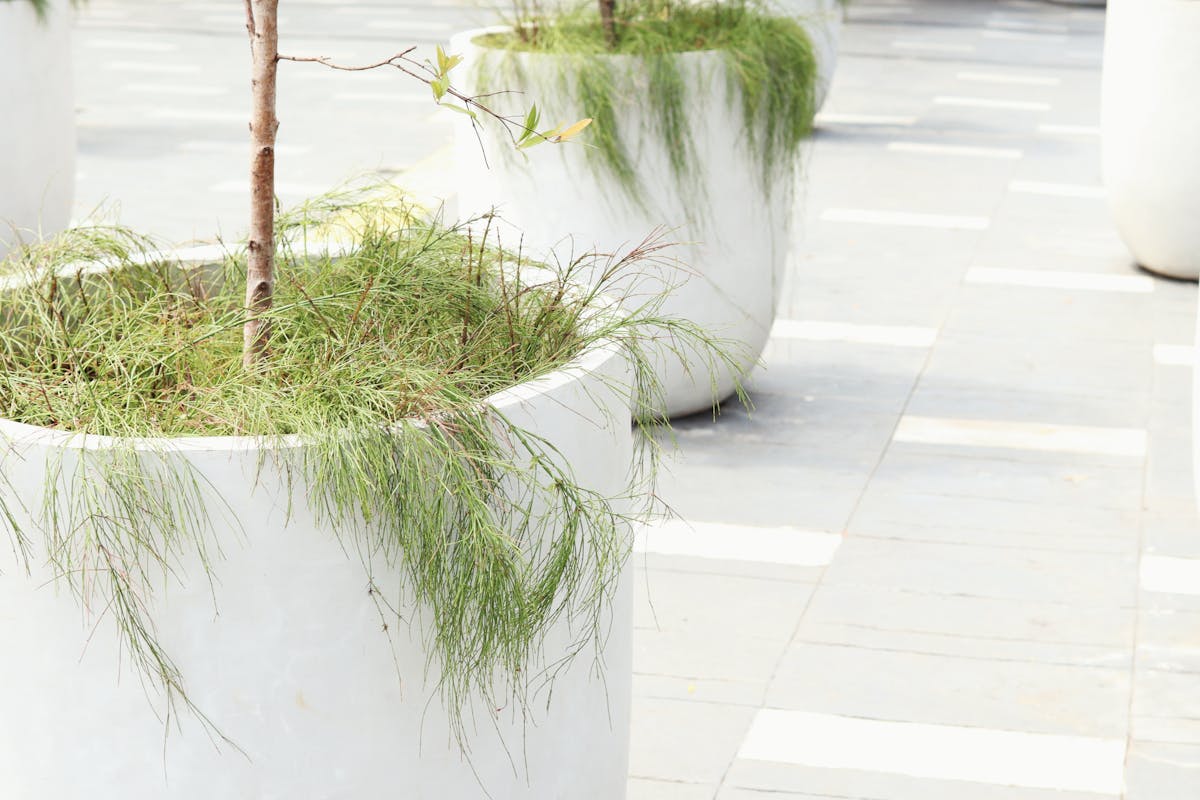
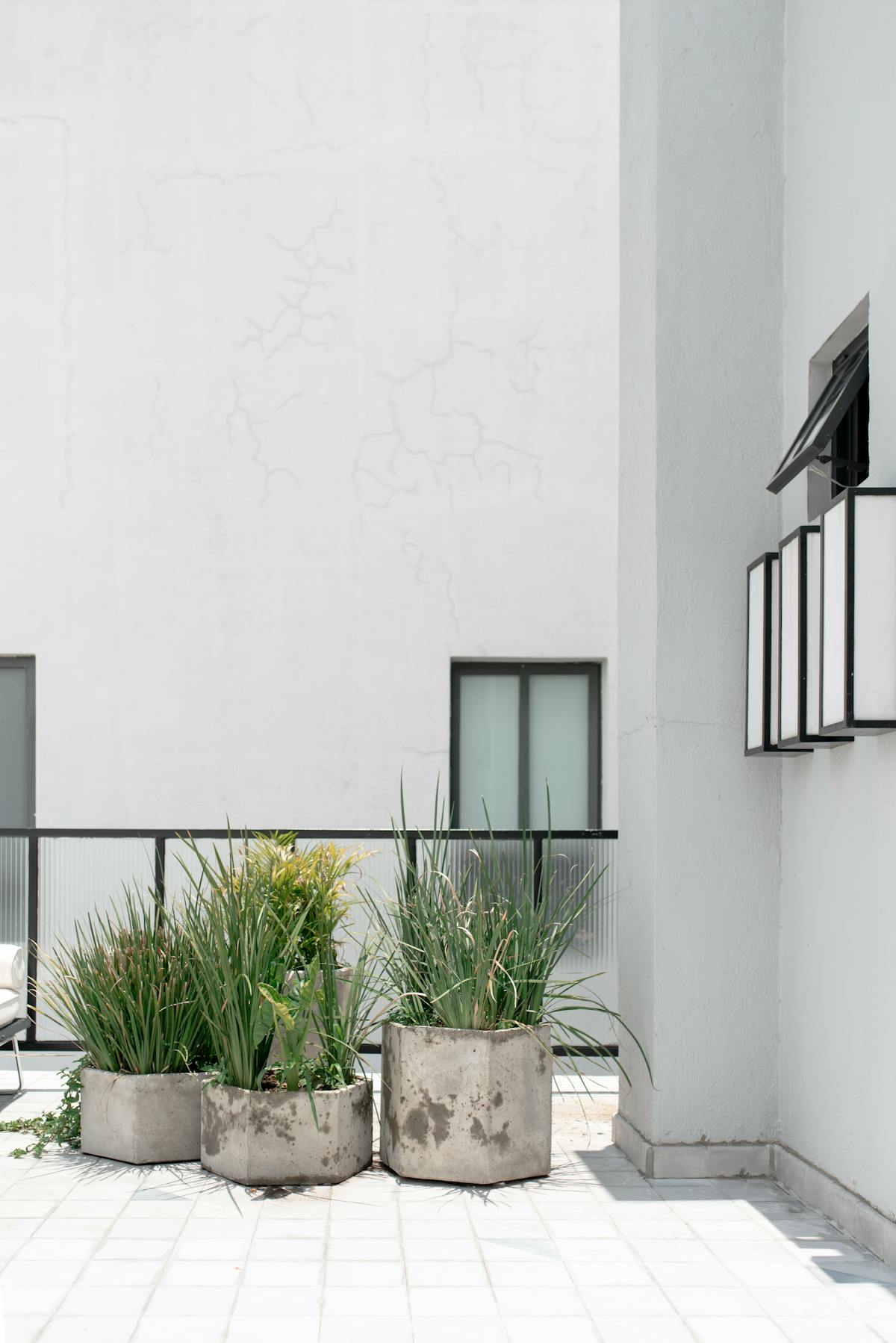
Concrete is the modernist choice. Heavy, monolithic, and effectively permanent, it suits ground-level patios, rooftop terraces and large landed gardens. The catch is weight – a 1.2-metre concrete planter can exceed 200 kg empty, which means it is rarely a good idea on an HDB or condo balcony unless your structural plan was designed for the load. Pre-cast concrete planters from Singapore garden centres start around $250 and climb past $2,000 for sculptural pieces.
Metal and aluminium planter box
Aluminium and powder-coated steel planters give you the cleanest modern silhouette and weigh almost nothing compared to concrete. Aluminium does not rust, which matters in our humidity. The trade-off is heat – dark metal in direct afternoon sun can cook shallow roots. Use lined inserts and pick lighter colours, or place metal planters where they get morning sun only.
Other timbers and fibreglass
Cheaper softwoods like pine warp within a year outdoors here. Recycled teak and balau are reasonable mid-range timber options. Fibreglass is the fast-growing alternative – it mimics concrete or stone visually, weighs a fraction, and resists cracking. A good fibreglass planter runs $200 to $700 and is the practical pick when you want a concrete look on a balcony that cannot take real concrete weight.
| Material | Price range (SGD) | Lifespan outdoors | Weight | Best for |
|---|---|---|---|---|
| Chengal hardwood | $400 – $1,200 | 12 – 20 years | Medium | Balconies, terraces, anyone who wants real wood that lasts |
| Concrete | $250 – $2,000+ | 20+ years | Very heavy | Ground-level patios, rooftops with engineered loading |
| Aluminium / powder-coated steel | $180 – $900 | 10 – 15 years | Light | Modern condos, balconies, indoor-outdoor rooms |
| Fibreglass | $200 – $700 | 8 – 12 years | Light | Balconies that cannot take concrete weight |
| Recycled teak / balau | $280 – $800 | 6 – 10 years | Medium | Casual budget pick, accepts more frequent oiling |
Best planter box sizes for HDB balconies, condo balconies and landed gardens
Sizing is where most planter box buyers get it wrong. Too small and the soil dries out daily; too big and you exceed the slab loading or block the walkway. Here is the rule of thumb we use when speccing a hdb balcony planter box versus a condo or landed equivalent.
HDB balcony. Standard HDB balcony depth is 1.0 to 1.4 metres and length runs 2.4 to 3.6 metres. We design planter boxes 30 cm deep, 25 to 30 cm wide front-to-back, and 90 to 180 cm long, sitting against the parapet wall. That depth supports herbs, trailing flowers, and most ornamentals without root binding. Going deeper than 35 cm starts to eat usable balcony floor.
Condo balcony. Condo balconies vary, but most have higher ceilings and longer runs. We can go 35 to 45 cm deep, which opens up small fruiting plants like chilli, lime, and dwarf banana, plus shrubs up to 1.5 metres tall. Always verify slab loading capacity before placing concrete; aluminium and fibreglass are safer defaults.
Landed garden or rooftop. No real size limit, but we group planters in modular runs of 1.2 or 1.8 metres so a contractor can lift and reposition them. For rooftops specifically, see our guide on rooftop gardens in Singapore for waterproofing and load considerations.
Herbs and small flowers need 20-25 cm of soil depth. Most ornamental shrubs need 30-40 cm. Small fruit trees and dwarf bananas need 50-60 cm and a stable, wide base. Always size your outdoor planter box for the largest plant you might ever put in it, not the seedling you start with.
Outdoor planter box ideas: 8 design styles for Singapore homes
Once material and size are settled, design is what makes a balcony look intentional. These eight directions are styles we have built or restored in Singapore homes over the last few years.
Modern minimalist
Long, low aluminium or concrete trough in white, charcoal or graphite. Plant only one or two species at varying heights. Reads architectural rather than garden-y.
Tropical rainforest
Chengal box with mixed-height layered planting – tall heliconia at the back, mid-height calathea, trailing pothos at the front. Plays into our climate.
Edible herb garden
30 cm deep wooden box partitioned into four sections for basil, mint, kaffir lime, and cili padi. Easy to maintain and gives kitchen returns. See our guide on edible plants for landscaping.
Vertical wall planter
Stacked or wall-mounted planter boxes that climb the parapet wall. Triples your green footprint without taking floor space. Read more on vertical green walls in Singapore.
Recessed bench combo
L-shaped chengal planter that doubles as a bench seat. Plant the back half, leave the front 35 cm for cushions. Works beautifully in condo balcony corners.
Trellis with climbing plants
Planter box paired with a vertical timber or metal trellis for thunbergia, jasmine, or passionfruit. Doubles as a privacy screen between balconies.
Mediterranean
Pale concrete or limestone planters with rosemary, lavender (in shaded morning sun), olive saplings and dwarf citrus. Drought-tolerant and low-watering.
Zen monochrome
Single black or charcoal planter, gravel mulch, sculptural plants like bonsai-style ficus or sansevieria. Pairs with a zen garden aesthetic.
Drainage, waterproofing and balcony slab protection
Every planter problem in Singapore eventually traces back to drainage. Three rules will save you from leaks and dead roots.
One: drill or buy with proper drainage holes. A planter box needs 4 to 6 drainage holes minimum, sized 12 to 18 mm. Cover the inside of each hole with a layer of fine mesh to keep soil in but let water out. No drainage holes equals dead roots within weeks during our wet season.
Two: never sit a planter directly on the slab. Use feet, plinths, or a raised tray that lifts the planter 25 to 40 mm off the floor. This air gap prevents the slab from staying permanently damp underneath, which is the cause of most balcony water-leak complaints in HDB and condo blocks.
Three: catch the runoff. A drip tray or recessed channel under each planter contains the water that escapes during heavy watering and tropical downpours. For balconies that drain toward a single floor trap, this is non-negotiable. The BCA Code on Buildability requires balcony water to flow to designated drainage points – any pooling around your outdoor planter box can land you with a downstairs neighbour complaint.
Where to buy ready-made vs custom-build: how to decide
Singapore has plenty of off-the-shelf options. Garden centres and online retailers carry standard concrete, fibreglass and aluminium planters in fixed sizes, usually $150 to $500 per piece. That works well when your space is regular and you just need a few units.
Custom-build wins in three situations. The first is when your balcony or terrace has irregular dimensions – an L-corner, a slope, or a non-standard length where stock planters leave awkward gaps. The second is when you want a built-in look that integrates with the parapet, decking, or seating. The third is when you need chengal, since most ready-made chengal planters are limited in size and shape.
A custom custom planter box singapore build gives you exact dimensions, choice of wood grade, integrated drip tray and drainage, optional internal liner, and a finish that matches your decking. The build cost is typically 30 to 50 per cent more than equivalent stock pieces, which most homeowners find reasonable given the install fits perfectly the first time.
Custom planter box services in Singapore
Green Garden has been building landscape solutions across Singapore since 2004. Our custom outdoor planter box service covers the full chain: site survey, slab loading check, design rendering, chengal or hardwood fabrication in our workshop, on-site installation with drainage and waterproofing, and optional planting and ongoing maintenance.
Most projects take 7 to 14 working days from sign-off to install. We work with HDB, condo, landed and commercial spaces, and we handle the strata or MCST notifications when needed. Common requests include long built-in balcony planters, modular rooftop gardens, herb gardens for chefs, and sculptural feature planters at landed entrances.
Get a quote on a custom outdoor planter box
Send us photos and dimensions of your balcony, terrace or garden. We will reply with sketch options and an honest price within 1 working day.
Care and maintenance: keeping outdoor planters thriving in tropical climate
Soil mix. Use a free-draining loam-based mix with 30 per cent compost and 10 per cent perlite or coarse sand. Pure peat or pure topsoil compacts after one wet season and starves roots of oxygen.
Watering schedule. Singapore humidity tricks new owners. Even when the air is wet, planter soil dries out fast in direct sun. As a baseline, finger-test the top 4 cm daily; water when dry. Most balcony planters need watering once a day in March to October and every two days in our wet months.
Fertiliser. Slow-release granular fertiliser every 8 weeks, plus liquid feed every 3 weeks during peak growth. Use organic options for edible planters.
Pest watch. Mealybugs, scale, and spider mites all thrive in our humidity. A weekly visual check and a soft-water blast at first sight is enough to prevent infestations from getting expensive.
Outdoor planter box FAQ
What is the best outdoor planter box for Singapore weather?
Chengal hardwood is our top pick for balcony and terrace use because it handles termites, sun and rain for 12 to 20 years with minimal care. For ground-level patios where weight is no issue, concrete is unbeatable for longevity. For modern condos with weight constraints, fibreglass gives you the concrete look without the slab load. The best outdoor planter box is the one matched to your slab loading, sun exposure and how long you plan to stay.
How big should an outdoor planter box be for an HDB balcony?
For most HDB balconies, we recommend planter boxes 30 cm deep, 25 to 30 cm wide front-to-back, and 90 to 180 cm long, sitting along the parapet wall. That depth supports herbs, ornamentals and trailing plants without taking up usable floor space. Avoid going deeper than 35 cm on a standard HDB balcony – you lose more floor than you gain in plant volume.
Is chengal wood worth it for outdoor planter boxes?
Yes, if you plan to keep your balcony or terrace garden for 5 years or more. Chengal costs roughly 50 to 80 per cent more than balau or recycled teak, but it lasts two to three times longer and is naturally resistant to Singapore’s termites, fungal rot and direct sun. For temporary or rented spaces, balau or fibreglass is the smarter spend.
Do planter boxes damage condo balcony slabs?
Not when installed correctly. Three things prevent damage: feet or plinths that lift the planter 25 to 40 mm off the slab so air can circulate beneath, a drip tray or channel that catches runoff, and an internal liner so soil moisture does not seep through the box base. Concrete planters can stress lightweight balcony slabs – always verify loading capacity with your management or structural engineer first.
Can I have a custom planter box made in Singapore?
Yes. Several landscape contractors in Singapore offer custom planter box fabrication in chengal, balau, aluminium, and fibreglass. Lead time is typically 7 to 14 working days from approval. Custom is the right choice when your space has irregular dimensions, when you want a built-in finish, or when you need a wood grade that stock planters do not carry.
What soil mix works for outdoor planter boxes here?
A loam-based mix with about 60 per cent quality topsoil, 30 per cent mature compost and 10 per cent perlite or coarse sand handles most balcony plants. For edibles, raise compost to 40 per cent. Avoid pure peat or pure topsoil – both compact within one wet season and suffocate roots.
How often should I water outdoor planter boxes in Singapore?
Once a day during the drier March to October stretch and every two days during the wetter months, adjusted by sun exposure. Always finger-test the top 4 cm of soil before watering – if it feels damp, skip. Overwatering is the most common cause of root rot in balcony planters, ahead of underwatering.
What is a good planter box height for tall plants?
For shrubs up to 1.5 metres tall, a planter 40 to 50 cm deep with a base width matching the depth is stable. For dwarf fruit trees or banana plants, go to 60 cm depth and weight the base with a heavier material. Tall plants in shallow planters tip in tropical thunderstorms.
Pulling it together
Choosing an outdoor planter box in Singapore comes down to four decisions: material matched to your slab and sun, depth matched to the plants you want, drainage that respects the BCA balcony rules, and a design language that makes the space feel finished rather than cluttered. Get those right and a single planter installation can shape an outdoor area for the next decade.
If you would rather hand it to a contractor, our team at Green Garden builds custom planters from sketch to install across HDB, condo, landed and commercial sites in Singapore.