
Termite Control Singapore
Silent destroyers eat through timber for months before visible damage appears. Green Garden’s NEA-licensed specialists identify the species, eliminate the colony, and protect your HDB, condo, or landed property — with eco-safe, warranty-backed treatment starting from S$150.
Termites cause silent structural damage to homes across Singapore — often for months before visible signs appear. Green Garden’s NEA-licensed specialists protect HDB flats, condominiums, and landed properties with eco-safe, warranty-backed termite control — from inspection and species identification through to full colony elimination.
Singapore’s year-round heat and humidity create ideal breeding conditions for all three common termite species. Every property type — from 3-room HDB flats to landed bungalows and F&B outlets — is exposed. Early detection, correct species identification, and NEA-approved treatment stop the colony before structural damage becomes costly.
If you are looking for a broader overview of professional pest control services in Singapore, Green Garden also provides NEA-licensed solutions for termites, rodents, mosquitoes and other common pest issues.
Termite Species in Singapore
There are three types of termites commonly found in Singapore. Correctly identifying the species is the single most important step — because the treatment method differs significantly between them.

🟠 Subterranean Termites
- Most common and destructive in SG
- ~90% of all termite damage
- Live underground, travel via mud tubes
- Attack foundations, beams, flooring
- Best treated with baiting or soil treatment

🔵 Drywood Termites
- Live entirely inside dry wood
- No soil contact needed
- Attack furniture, doors, window frames
- Leave small dry pellets (frass)
- Best treated with spot treatment or fumigation
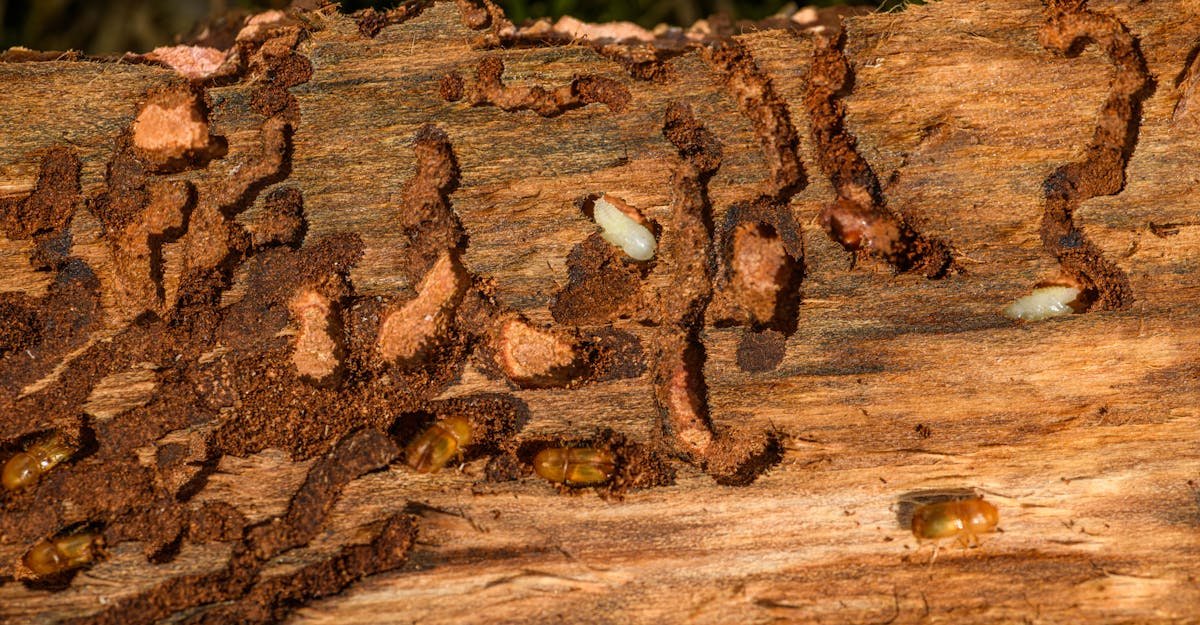
🟤 Dampwood Termites
- Least common in urban Singapore
- Requires moist, rotting wood
- Found in gardens, tree stumps, water leaks
- Does not build mud tubes
- Treated by fixing moisture + replacing wood
Signs of Termite Infestation
Termite colonies can hollow out structural timber for months or years before visible damage appears. Singapore’s tropical conditions accelerate colony growth, making early-stage detection the single biggest factor in treatment cost and success.
Mud tubes on walls or skirting boards — Pencil-thin tunnels made of soil and saliva, built by subterranean termites as protective highways from the ground to their food source.
Hollow-sounding wood — Tap your wooden floors, door frames, and skirting boards. A hollow sound indicates termites have eaten through the interior, leaving only a thin shell.
Discarded wings near windows or doors — Flying termites (alates) shed their wings after swarming to start new colonies. Small piles of wings near light sources are a strong indicator of an active, mature colony nearby.
Frass (termite droppings) — Drywood termites push their pellet-like droppings out of the wood. These look like tiny coffee grounds or sawdust piles near wooden furniture or door frames.
Doors and windows that suddenly stick — Termite activity produces moisture as they eat through timber, causing wood to warp and expand. If your doors or windows start jamming without a clear reason, inspect the surrounding timber.
Bubbling or uneven paint — On walls with timber structures behind them, termite activity can cause moisture to build up, creating bubbled or peeling paint that mimics water damage.
Visible damage to wood — In more advanced infestations, you may see grooves, channels, or a honeycomb-like interior in wooden beams, furniture, or built-in cabinets. At this stage, professional treatment is urgent.
Do NOT spray aerosol insecticide on termites — This is one of the most common mistakes homeowners make. Spraying termites causes the colony to scatter and relocate deeper into your walls, making treatment significantly harder and more expensive. If you see signs of termites, stop, leave the area undisturbed, and contact a professional.
Treatment Methods
There is no single “best” termite treatment — the right method depends entirely on the species involved, the severity of the infestation, and your property type. Here is a clear breakdown of every treatment approach used by NEA-licensed companies in Singapore.
🎯 Termite Baiting System
The most comprehensive and colony-elimination approach for subterranean termites. Bait stations (above-ground or in-ground) are placed at strategic points around and within the property. Worker termites consume the bait — which contains an insect growth regulator — and carry it back to the colony, spreading it to other members including the queen. Over 2–6 months, the entire colony is eliminated.
Subterranean termite infestations, landed properties, and cases where chemical soil injection is not possible.
🌱 Soil Treatment (Termiticide Barrier)
A liquid termiticide is injected into the soil surrounding and beneath the property’s foundation, creating a continuous chemical barrier. Any subterranean termite attempting to cross the barrier is either killed on contact or carries the termiticide back to the colony. This method is ideal for pre-construction treatment (mixing into the soil before laying the foundation) and post-construction treatment (drilling through floor and wall slabs to reach the soil).
New constructions, post-renovation protection, and landed properties with serious subterranean infestations.
🔍 Spot Treatment
Targeted application of termiticide directly to localised areas of infestation — typically specific pieces of furniture, door frames, or small sections of wooden flooring. Spot treatment is appropriate for early-stage or contained drywood termite infestations. It is fast, minimally disruptive, and the most affordable option, but does not address the broader colony if the infestation has spread.
HDB flats with drywood termites in furniture or built-ins, early-stage infestations.
🔧 Corrective Treatment (Drilling Method)
Used post-construction when soil treatment is needed but the floor or walls are already finished. Small holes (approx. 8–12mm diameter) are drilled through concrete slabs, tiles, or walls at regular intervals. Termiticide is injected through these holes to create a sub-slab chemical barrier. Holes are patched after treatment. This method directly targets subterranean termite pathways beneath finished structures.
HDB flats, condos, and older landed properties where pre-construction soil treatment was not done.
💡 Green Garden difference: We use only NEA-approved, low-toxicity termiticides that are classified as safe for occupied premises. Our eco-friendly formulations are odourless, non-staining, and have minimal environmental impact — suitable for households with young children, elderly residents, or pets.
Transparent Pricing (2026)
The average cost of termite control in Singapore ranges from $150 for minor spot treatments to $2,000 for full colony baiting programmes. Prices vary based on property size (HDB vs Landed) and the severity of the infestation. See our detailed 2026 price breakdown below.
| Treatment Type | Suitable For | Price Range (SGD) | Warranty |
|---|---|---|---|
| Spot Treatment | HDB, drywood, minor infestation | $150 – $400 | 30–90 days |
| Corrective Treatment (Drilling) | HDB, Condo, post-construction | $600 – $1,200 | 1–3 years |
| Soil Treatment (Pre-construction) | New build, landed | $800 – $1,500 | 5–10 years |
| Soil Treatment (Post-construction) | Landed, severe infestation | $500 – $1,200 | 1–5 years |
| Termite Baiting System | Subterranean, full colony elimination | $800 – $2,000 | 1–2 years (with monitoring) |
| Annual Inspection Programme | All property types, preventive | $150 – $300/yr | N/A |
What Affects the Cost?
Property Size
Larger floor areas need more bait stations or termiticide. A 3-room HDB costs less than a 4-storey landed property.
Infestation Severity
A contained spot infestation is far cheaper than a colony spread through multiple rooms or floors.
Treatment Method
Baiting costs more upfront but eliminates the entire colony. Soil is faster but may need re-treatment.
Access & Drilling
Difficult access — fully tiled floors or built-in cabinets — may add drilling and patching charges.
Warranty Terms
Longer warranties mean higher upfront cost but lower total lifetime cost.
Note: Always request a written, itemised quotation after the on-site inspection — never accept a phone quote without seeing the property. Compare at least 2–3 quotes before committing. Be wary of unusually low quotes that do not specify the product used, warranty terms, or number of follow-up visits.
Treatment by Property Type
HDB Flats
Most affected by drywood termites in built-in carpentry, laminated furniture, door frames, and timber flooring. Subterranean termites may enter via shared walls. Spot treatment or corrective drilling recommended.
Condominiums
Similar drywood risks to HDB. Ground-floor units face higher subterranean risk via shared walls and underground pathways. Spot treatment, above-ground baiting, or soil treatment as needed.
Landed Properties
Highest termite risk in Singapore — direct soil contact, gardens, and timber decking create multiple entry points. Comprehensive soil treatment and baiting monitoring programme recommended.
Commercial & F&B
NEA-regulated premises. Termite damage to shelving, counters, and structural timber is a regulatory risk. Commercial contracts with monitoring reports for NEA compliance documentation.
Our Professional Inspection
Our standard inspection includes:
Visual inspection of all accessible areas — Our technician walks through every room, checking timber structures, skirting boards, door frames, built-in furniture, and ceilings for visual signs of mud tubes, frass, wing casings, and damage.
Moisture detection — Using a calibrated moisture meter, we check wall cavities and flooring for elevated moisture levels — a key indicator of subterranean termite activity hidden behind finished surfaces.
Hollow-point testing — Systematic tapping of wooden surfaces to identify hollow sections that indicate interior consumption by termites.
Thermal imaging (where available) — For landed properties or serious suspected infestations, advanced thermal imaging technology can be used to detect heat signatures consistent with active termite colonies behind walls and under floors — completely non-invasive. Availability subject to site requirements.
Species identification — Based on the evidence collected, we identify the termite species involved. This step determines the correct treatment method.
Written report and quotation — You receive a written inspection report documenting all findings, the recommended treatment plan, the products to be used, expected timeline, warranty terms, and a clear itemised quotation.
Our free inspection takes 45–90 minutes for a typical HDB or condo unit, and up to 2 hours for a landed property. There is no obligation to proceed with treatment after the inspection.
How to Prevent Termites
Fix Moisture
Repair leaking pipes, condensation, and drainage issues promptly. A single leak can sustain a colony.
Proper Storage
Avoid storing cardboard, newspapers, timber, or firewood in damp spaces. Use sealed plastic containers.
Good Ventilation
Damp, poorly ventilated spaces create the humidity termites thrive in. Ensure airflow throughout.
Regular Checks
Every 3-6 months, inspect mud tubes, hollow sounds, and behind large furniture.
Treat Before Renovating
Pre-renovation soil treatment and termiticide barriers protect for 5-10 years.
Resistant Materials
Engineered wood (HMR-grade MDF) or pre-treated solid timber slows infestation significantly.
Annual Inspection
An annual NEA-licensed inspection catches early-stage activity years before homeowners notice.
DIY vs Professional Treatment
Store-bought termite products are widely available. Here are the key differences vs professional treatment: Here is an honest comparison.
| Factor | DIY Treatment | Professional Treatment |
|---|---|---|
| Upfront cost | Lower ($30–$100 for store products) | Higher ($150–$2,000 depending on method) |
| Effectiveness | Kills visible termites only; colony survives | Eliminates entire colony including queen |
| Species identification | Usually not done; risk of wrong treatment | Correct ID before every treatment |
| Risk of making it worse | High — sprays scatter colonies deeper | Low — professional methods are targeted |
| Warranty | None | 30 days to 10 years |
| Long-term cost | Higher — repeated treatments + escalating damage | Lower — problem resolved correctly once |
| NEA compliance | Products may not be NEA-approved | All products NEA-approved and compliant |
Green Garden’s position: DIY termite products are appropriate only for extremely minor, surface-level drywood termite contact — for example, a single small affected area on a piece of garden furniture. For any infestation inside your home, professional treatment is the only reliable solution. The cost of DIY failure — damaged structures, spreading colonies, and eventually much more expensive professional remediation — almost always exceeds the cost of getting professional help at the start.
What Our Customers Say
EXCELLENT Based on 43 reviews
 Posted on Google
 Chinchee LimWe’d like to give a big shout-out to the amazing team lead by leader Faizal from Beacon Heights for the fantastic job they’ve been doing around Beacon Heights! A huge thank-you to Greengarden and the whole team for helping make Beacon Heights a cleaner and more comfortable place for everyone. Keep up the great work ! Truly deserve the recognition as the best cleaning team we ever had !Posted on Google
 Kenny GohThe team is professional and takes pride in their work! Super impressed by the team in the way they prune the tall trees and the cleaning up. Highly recommended and I’ll certainly call on them again.Posted on Google
 Eileen OngA big thank you to GG cleaning for their supports during the many years services with us at 35 Greenwich Drive. Yusry, Ragu and the team are very hardworking, responsive, alert, diligent.Posted on Google
 Lucia Lin⭐⭐⭐⭐⭐ We engaged them for carpet cleaning across all four Mind Sparks centres, and the experience was exceptional! Communication with Yusry, OE Latif, and the entire cleaning team was smooth and professional from start to finish. They were punctual on the appointed dates, ensuring no delays in our schedule. The team was highly efficient, delivering thorough cleaning without disrupting our daily operations. They made sure each carpet was spotless before leaving each site. Kudos to the team for working hard and maintaining such high standards! Their dedication and attention to detail exceeded our expectations. I would highly recommend them anytime—thank you for your excellent service! 😊Posted on Google
 sia sharonMany thanks to the Green Garden cleaning team at Schenker Red Lion for their outstanding support over the past year. The cleaners, professionally trained by their leads—Yusry, Ragu, and Nizam—deliver consistently high-quality service. The leads are patient, take the time to understand our needs and requirements, and work closely with us to gather feedback for ongoing improvements. Most importantly, this team is trustworthy, responsive, and always ready to provide immediate assistance for any ad-hoc requests. We truly appreciate their dedication!Posted on Google
 Kevin HouseWonderfully efficient and very quick. Top quality work. Thank you.Posted on Google
 Chung JoyOn a friend's recommendation, i contacted GreenGarden for a maintenance & balcony cleaning job. BDM Yusry was reassuring. Prompt scheduling. Latiff & team did a great cleaning job to satisfactory and within budget. I appreciate they do not rush through the job. I will be definitely be needing their good fulfillment very soon again. thank you once again!Posted on Google
 chwee hengMr Latiff and his team did a good job on the cleaning. The account manager Yusry was very responsive. Appreciate their level of service.Posted on Google
 Marcus TanI would like to thank Mr. Latif and his cleaning specialist for their exceptional work and service. Despite last minute changes and unforeseen circumstances, they worked around these challenges to fulfill the cleaning job. They were even willing to return the following day to perform touch up cleaning to ensure that the job was done to satisfaction. Thanks Latif and team! Appreciate the quick, efficient and professional service.
Frequently Asked Questions
How much does termite control cost in Singapore?
What are the signs of termites in my home?
Is termite treatment safe for children and pets?
How long does termite treatment take?
What is the difference between subterranean and drywood termites?
Does termite treatment work for HDB flats?
How do I prevent termites from coming back?
Do I need to leave my home during termite treatment?
How do I know if I need termite treatment or just an inspection?
Why Choose Green Garden for Termite Control in Singapore
NEA-Licensed Specialists
All our technicians hold valid NEA pest control operator licences and undergo regular training on the latest treatment methods and products.
Eco-Friendly Formulations
We use only low-toxicity, NEA-approved termiticides that are safe for your family, pets, and the environment. No strong odours, no unnecessary chemical exposure.
Transparent Pricing
Written quotations with full itemisation before any work begins. No hidden charges, no surprise invoices.
Free On-Site Inspection
Every engagement starts with a thorough inspection and honest assessment. We will never recommend more than your property actually needs.
Warranty-Backed Service
All treatments come with a written warranty. We return to re-treat at no additional cost if termites reappear within the warranty period.
Same-Week Appointments
Fast response islandwide. We understand that termite problems are urgent and respond accordingly.
Need help beyond termites?
View our full pest control service in Singapore for residential and commercial properties.
Book Your Free Termite Inspection
NEA-licensed specialists. Same-week appointments available islandwide. No obligation to proceed.
Looking for protection from other Singapore pests? See also: mosquito control | rodent control.