
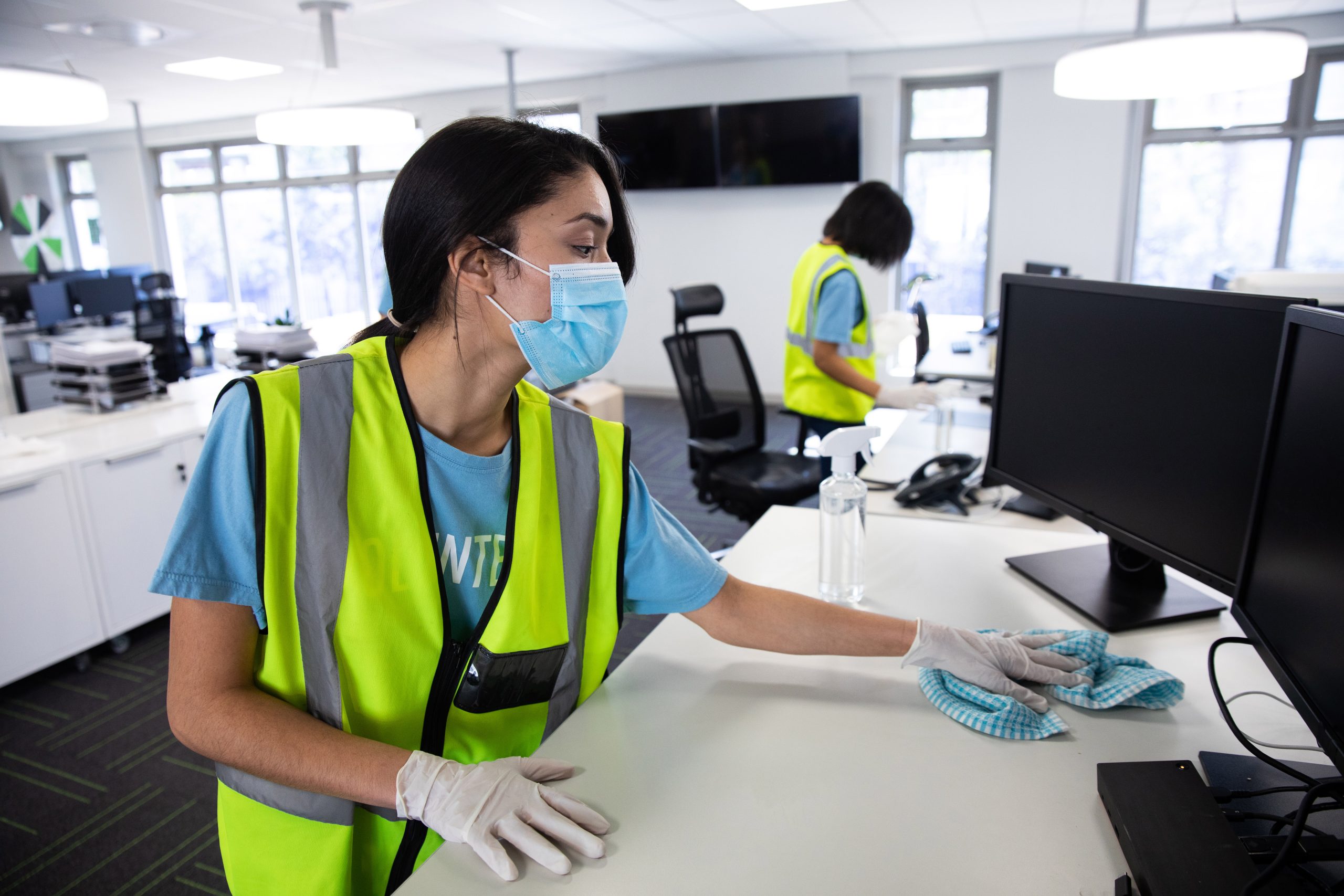
What Truly Separates a Good Commercial Cleaning Company?
A commercial cleaning contract is a complex logistical operation, not a simple task list. While sweeping floors and emptying bins are the bare minimum, offices, retail spaces, restaurants, healthcare facilities, schools, and industrial environments each present fundamentally different cleaning challenges related to surface types, pathogen risk, footfall density, and operational hours.
To systematically compare providers, evaluate them across nine interlocking dimensions:
- Licensing, Insurance, and Regulatory Compliance (not just having them, but what they actually cover)
- Cleaner Training, Certification, and Continuous Development (beyond basic WSQ)
- Scope Definition Methodology and Cleaning Frequency Rationale
- Quality-Control Infrastructure: Digital Inspection, Reporting, and Corrective Action
- Equipment Specification, Hygiene Protocols, and Cross-Contamination Prevention
- Proven Experience Within Your Specific Vertical and Environment Type
- Pricing Transparency, Service Flexibility, and Contractual Agility
- Documented Evidence of Customer Experience and Issue Resolution
- Environmental Responsibility and Sustainability Practices
These criteria separate a labour-outsourcing agency from a true hygiene management partner.
Deep-Dive into Company Experience, Credentials, and Compliance Infrastructure
Experience isn’t just the number of years a company has existed; it’s the diversity and relevance of the environments managed. A provider serving only small offices will be ill-equipped for a 24/7 food-processing facility. Green Garden’s over 15 years and hundreds of clients are meaningful only when substantiated by the types of premises served.
Critical credentials and what they actually mean for your business
All cleaning businesses in Singapore must be licensed under the Environmental Public Health Act. Beyond the basic licence, verify the grade. A higher grade indicates a stronger track record of compliance, financial standing, and operational capability. Ask: What class of NEA licence do you hold?
This means the company has documented, auditable processes for everything from cleaner deployment to complaint handling. It ensures consistency. Ask to see the scope of their certification and when the last surveillance audit occurred.
This is the highest level of bizSAFE certification, demonstrating that the company has fully integrated risk management and Workplace Safety & Health (WSH) practices into its operations. For you, this means fewer on-site safety incidents and a contractor that takes its legal duties seriously. Ask: Can you share a sample of your site-specific Risk Assessment (RA) and Safe Work Procedure (SWP)?
The Singapore Workforce Skills Qualifications (WSQ) framework is the national standard. Demand evidence that cleaners have undergone specific modules in cleaning chemicals handling, infection control, and effective mopping/vacuuming techniques—not just a generic certificate. Green Garden maintains training logs and conducts regular refresher courses.
Never assume. Request current certificates for Public Liability Insurance (with a minimum cover of S$1 million) and Work Injury Compensation Insurance. Confirm the certificates name your specific site as an insured location or have a broad-form clause.
“For an office/restaurant/medical facility of our size, describe a typical cleaning programme you’ve managed for the past year. What specific challenges arose, and how were they resolved?”
A top-tier provider will give a narrative with operational specifics, not just a generic reassurance.
Understanding How the Cleaning Service Is Managed: A Structured, Data-Driven Process
The single biggest difference between providers is not the equipment they own but the management system that operates the service day after day. A truly professional service follows a rigorous, phased methodology that treats your site as a unique project.
The 7-phase operational framework (as practised by Green Garden)
-
Comprehensive Site Survey & Needs Analysis
This is a physical walkthrough, not a phone call. A supervisor or operations manager visits your premises to record:
- Total Gross Floor Area (GFA) and net cleanable area (excluding fixed furniture, plant rooms).
- Detailed floor-finish schedule (carpet tiles, vinyl, marble, epoxy) and their condition.
- Washroom count, fixture types, and current hygiene status.
- Number of workstations, meeting rooms, pantries, and high-touch point inventory (light switches, door handles, lift buttons, shared phones).
- Peak occupancy headcount, footfall patterns, and operating hours.
- Identification of sensitive areas (server rooms, medical consultation rooms) requiring special protocols.
-
Precision Scope of Work (SOW) Definition
Based on the survey, a granular SOW is drafted. This is not “clean office”. It reads: “Vacuum all carpeted floor areas using HEPA-filtered upright vacuums, including edges and under accessible desks. Empty all 87 workstations’ waste bins and replace liners. Wipe all 12 meeting-room glass panels with a microfibre cloth and approved non-streak cleaner.” Every task is a specific, measurable activity.
-
Manpower Modelling & Schedule Engineering
This is science, not guesswork. Industry productivity benchmarks are used. For a standard office, one cleaner can typically handle 400-600 sqm per hour for daily cleaning tasks. The number of man-hours required is calculated based on SOW task durations, and a schedule is built. This output tells you why 2 cleaners for 4 hours is recommended, not 1 cleaner for 8 hours. Tasks are then engineered into schedules:
- Daily: Washroom sanitation, bin emptying, workstation dusting, high-touch disinfection, floor vacuuming/mopping.
- Twice Weekly: Detail dusting of skirting, partition tops, air-vent grilles (visible surfaces).
- Weekly: Interior glass spot-cleaning, pantry deep-clean and degreasing.
- Monthly/Quarterly: Carpet hot-water extraction, marble polishing, full interior window cleaning, high-level dusting.
-
Customised Digital Cleaning Checklist & SOP Integration
The SOW is digitised into a mobile-enabled checklist. Green Garden’s cleaners access this checklist on a company device, and it dictates the sequence of tasks, required chemicals, and equipment for each zone (e.g., “Pantry: Apply green-coded cleaner to cloth, wipe all horizontal surfaces, polish stainless steel...”). This eliminates reliance on memory or informal routines.
-
Inspection, Verification, and Real-Time Reporting
This is where most companies fail. Green Garden deploys a digital inspection system where a site supervisor or a designated lead cleaner verifies checklist completion with photo evidence. A dashboard shows real-time task completion rates. Clients receive scheduled monthly reports summarising compliance and any incidents. This is a closed-loop system: if a task is missed, it’s flagged, escalated, and rescheduled.
-
Structured Client Feedback & Continuous Improvement Loop
A monthly operations review meeting is more than a courtesy. It’s where SOW adjustments are formally documented, new requirements are assessed, and performance trends are discussed. Green Garden assigns a dedicated account manager as a single point of contact for all non-urgent changes.
-
Periodic Programme Review & Re-optimisation
Every 6–12 months, the site is re-walked to account for office layout changes, new equipment, or shifting occupancy patterns. Manpower and schedules are re-optimised to avoid over- or under-servicing.
Don’t just ask, “Do you do quality control?” Ask, “Show me a live demo of your digital checklist and reporting platform, and provide a de-identified sample of a client monthly report.”
Detailed Look at Cleaning Methods, Equipment, and Cross-Contamination Control
The equipment and consumables a company uses are a physical manifestation of their hygiene philosophy. Inadequate or dirty tools can spread soil and pathogens. In Singapore’s tropical climate, where biofilm and mould can develop rapidly, this is non-negotiable.
Green Garden’s technical arsenal and methodology
We use commercial-grade canister and upright vacuums with High-Efficiency Particulate Air (HEPA) filters (99.97% efficiency at 0.3 microns). This is standard for capturing fine dust, mite allergens, and particulate matter, preventing them from being re-exhausted into your breathing zone. For carpets, a motorised brush head with adjustable height is used to agitate pile and extract embedded soil. For hard floors, a dedicated smooth-floor head prevents scratching.
Our microfibre mops and cloths are not just one type. A high-density, short-pile cloth is used for disinfection (to hold and release chemical effectively), while a thicker, looped-pile cloth is used for general dusting and cleaning. We use flat-mop systems with pre-impregnated or bucket-dosed cleaning solution, ensuring a fresh, correctly diluted solution is used for each area—no more dirty mop water pushed around.
We use only NEA-approved disinfectants with proven efficacy against enveloped viruses, as per the interim list for surface disinfection. All cleaning chemicals are diluted through a controlled proportioning system, eliminating ad-hoc mixing that can damage surfaces or create hazardous fumes. Safety Data Sheets (SDS) for every chemical are kept on-site and digitally accessible.
Colour-coded coding system with a deeper logic
A 4- or 6-colour system is standard. Green Garden’s protocol goes further:
- Red: High-risk sanitary areas (toilet bowls, urinals, washroom floors). These tools are never used elsewhere.
- Blue: General office washroom surfaces (sinks, countertops, mirrors).
- Green: Pantries, kitchenettes, and food-contact surfaces.
- Yellow: General office and common area surfaces (desks, tables, door handles).
- White: Glass and mirror polishing (lint-free, dedicated).
This extends to mop handles, cloths, and even storage caddies.
By combining HEPA vacuums, a structured microfibre system, and rigorous colour-coding, Green Garden’s approach aligns with the NEA’s Indoor Air Quality Guidelines (2023), achieving reported improvements of up to 40% in indoor particulate levels and contributing to a 25–30% reduction in illness transmission rates across monitored client sites by removing fomite-pathogen reservoirs.
Vertical Specialisation: Experience That Speaks Your Industry’s Language
It’s not enough for a provider to list every industry. You need evidence that they understand your world’s specific compliance and operational pressures.
Office and Corporate Workplaces
The priority is a professional appearance and a healthy, productive workforce. Key details: Cleaning timing around sensitive financial or HR paperwork on desks, specialised care for expensive furniture finishes, quiet operation of equipment during office hours, and rapid, discreet response to spillages. Green Garden’s checklists include managing shared hot-desk zones with a quick-turnaround reset protocol, and ensuring meeting rooms are guest-ready with aligned chairs and cleaned whiteboards.
Retail Stores
The floor is the first and last impression. The programme must handle constant footfall dragging in dirt, dust, and moisture. Green Garden’s retail cleaning often includes provision of walk-off mat service (supply and cleaning), daytime “porters” who patrol the floor to spot-clean, and after-hours deep scrubbing of hard floors. Glass storefronts and display units are cleaned with anti-static treatments to repel dust.
Restaurants and Cafés
This is a food-safety-critical environment. The cleaning scope is designed in consultation with your HACCP (Hazard Analysis and Critical Control Points) plan if applicable. High-risk zones like grease traps, extraction hoods, and cooking-range floors require degreasing agents and separate colour-coded equipment (brown for kitchen, green for dining area). A common mistake is using an office janitor in a kitchen, which causes cross-contamination. Green Garden allocates dedicated, food-area-trained cleaning teams for F&B sites, with a schedule that often starts after the kitchen is closed and ends before prep begins.
Healthcare and Medical Premises
This demands the highest level of precision. Beyond standard NEA disinfectants, the cleaning sequence is critical: from cleanest to dirtiest, from high to low. Terminal cleaning protocols for infectious-disease patient areas are a distinct SOP. Green Garden’s healthcare teams are trained in donning/doffing of PPE, proper handling of biomedical waste (in compliance with NEA’s biohazardous waste regulations), and cleaning of sensitive medical equipment surfaces with approved chemicals that won’t damage sensitive screens or plastics. We can demonstrate competency with a mock scenario.
Industrial and Technology Facilities
These environments often have uneven floors, heavy machinery, and hazardous substances. The key is safety: non-slip floor treatments after cleaning, explosion-proof vacuum cleaners in certain chemical storage areas, and strict lock-out tag-out (LOTO) awareness so that cleaning never accidentally activates machinery. Our industrial teams are WSH-trained for confined spaces and working at height, where required for cleaning high-level ducting or rafters.
Schools and Educational Facilities
Cleaning must happen within tight windows between classes or after dismissal. Child-safety is paramount, so all chemicals are low-VOC, fragrance-free where possible, and stored in locked, inaccessible cabinets. The focus is on frequently-touched surfaces where hand, foot, and mouth disease or influenza outbreaks can spread rapidly—desks, taps, handrails, and shared toys/equipment, which are disinfected daily with a non-toxic, food-surface-safe sanitiser.
“Please provide a detailed cleaning task list and frequency schedule for our specific vertical, and explain the rationale for each element in the context of our industry’s regulatory requirements.”
Scope Comparison and Transparent Pricing: How to Do a Line-by-Line Analysis
The single biggest pitfall in procurement is comparing two quotes with a 30% price difference that are in fact for 30% different work. To make a fair comparison, you must dissect the scope.
Create a Standardised RFQ Template
Before you get quotes, build a table with:
- Task Area: (e.g., “Washroom Deep Clean”, “Workstation Dusting”)
- Frequency: (Daily, Weekly, Monthly)
- Specification: (The detailed “what and how” from section 2)
- Expected Duration per Visit: (To compare man-hour assumptions)
- Consumables Included: (Bin liners, hand soap, toilet paper? Specify grade and refill frequency.)
Give this identical template to every bidder. This forces them to respond on your terms.
Factors that should be line items in a quotation
- Base cleaning labour (number of cleaners × hours × frequency × wage rate + overhead margin).
- Supervision and management cost.
- Equipment depreciation or rental.
- Consumables package (with a per-item cost for transparency).
- Ad-hoc service rates (e.g., hourly rate per cleaner outside of contract hours, per-square-metre rate for carpet shampooing).
- One-off mobilization fee (if any).
- Public holiday and weekend surcharges explicitly stated.
Green Garden’s indicative office pricing framework (for informed budgeting)
This includes one cleaner for a 2-3 hour shift, covering bin removal, workstation dusting, floor vacuuming/mopping, pantry & washroom wipedown, and consumable replenishment.
This involves a dedicated daily team (e.g., 2 cleaners for 4 hours) with a comprehensive SOW including all high-touch disinfection, meeting room reset, a supervisory check, and a detailed digital report.
You are paying for a full-time on-site supervisor, a dedicated account manager, and a customised programme.
“Based on my identical scope of work, what is your fully-loaded monthly price, and what is specifically excluded?”
If a provider can’t price to your specification, they are not a serious contender.
Dynamic Frequency: Designing a Schedule for Singapore’s Climate and Your Usage
A rigid, one-size-fits-all schedule fails in Singapore’s high-humidity, high-occupancy environment. A scientific approach aligns task frequency with a “soil load factor” for each area.
A typical optimised office schedule matrix
| Zone/Activity | Rationale | Standard Frequency (Guideline) | Adjustment Trigger |
|---|---|---|---|
| Washroom Full Service | Biofilm and odour control, highest risk. | Twice Daily (AM deep clean, PM refresh) + High-Touch Disinfection every 2-4 hours during business hours (if budget permits). | Increase to 3x daily if headcount >100 per shift or during flu season. |
| Bin Removal (Workstations) | Prevent pest infestation, odour, and insect breeding. | Daily | May be shifted to evening-only if food waste is not present. |
| Hard Floor Vac & Mop | Grit and dust from outside footfall. | Daily | Add a second shift if raining heavily or after an event. |
| Carpet Vacuuming | Mite and allergen control. | Daily for high-traffic lanes, 3x/week for low-traffic. | High-traffic lanes (entrances, corridors) daily always. |
| High-Touch Disinfection | Fomite transmission control for handles, switches, buttons, rails. | Daily | During disease outbreak alerts, increase to 2-3x daily. |
| Partition/Skirting/High-Level Dusting | Visible aesthetic and air quality. | Weekly | Bi-weekly if office is not externally vented. |
| Carpet Hot Water Extraction | Deep extraction of embedded soil, stains, allergens. | Quarterly | Entrance matting areas may require monthly; executive offices biannually. |
| AC Filter/Cleaning | Airflow, energy efficiency, mould prevention. | Monthly visual check, clean/replace 1-3 monthly. | Food courts, ground-floor, or haze-affected areas: monthly replacement. |
“I don’t want a generic schedule. Walk my site and give me a frequency matrix that considers my floor finishes, headcount, and the fact we have a high-fungus-susceptibility records in the server room.”
The Anatomy of a Commercial Cleaning Session: A Minute-by-Minute Example
A managed programme follows a defined choreography to maximise efficiency and hygiene, which prevents cross-contamination. Here is a sample detail for a 4-hour evening shift for a typical 3,000 sqft office.
Cleaner A (General Areas & Washrooms), 6:00 PM–10:00 PM
-
6:00–6:10 PM
Set-upArrive, clock in via mobile app, review digital checklist. Put on company uniform and PPE. Prepare cleaning cart with pre-diluted, labelled chemicals and colour-coded cloths/mops.
-
6:10–7:00 PM
Washroom Primary CleanIn one washroom at a time, spray and let dwell (3-5 minutes) disinfectant on all high-touch fixtures (toilet seats, flush handles, tap levers, door knobs). Then follow sequence: flush all urinals/WCs, apply bowl cleaner. Wipe mirrors (white cloth). Clean sinks and countertops (blue cloth). Wipe high-touch fixtures with a fresh disinfectant cloth. Scrub bowls, rinse. Finally, mop floor with a red mop, working backwards to the door. Restock soap, toilet paper, paper towels. Photograph the finished, stocked washroom.
-
7:00–7:45 PM
Pantry/KitchenetteUse green-coded tools. Clear and wipe down all countertops, sink, and appliance exteriors. Remove food waste bin, clean bin interior if needed. Wipe microwave inside and out. Wipe table surfaces. Mop floor with a green mop. Photograph the clean, grease-free area.
-
7:45–7:55 PM
BreakBreak.
-
7:55–9:00 PM
General Office AreasStart from one end of the office. Using a yellow HEPA backpack vacuum, vacuum all carpeted walkways, then under and around accessible desks. Using a yellow microfibre cloth and a general-purpose cleaner, dust all horizontal surfaces on workstations, filing cabinets, and meeting-room tables (paying attention to not disturbing papers). Empty all workstation bins, replace liners, and carry all collected waste to the central disposal point.
-
9:00–9:50 PM
Meeting Rooms & High-Touch DisinfectionFor 12 meeting rooms, dust tables, vacuum floors, straighten chairs. Wipe all glass panels with a white cloth and glass cleaner. With a dedicated yellow disinfection cloth, methodically wipe all door handles, light switches, lift buttons, shared printer/copier touch panels, and railings. This is the final hygiene sweep.
-
9:50–10:00 PM
Close-outFinal walkthrough, check that lights are off (where required), secure areas, complete digital checklist, upload any variance notes, and clock out. A daily task completion report is auto-generated.
This level of procedural detail is what you are buying with a professional service.
Flexibility Beyond the Contract: Handling Growth, Events, and Unexpected Change
The best contract is one that serves your business, not the other way around. Agility must be a documented capability, not a promise.
Scenarios and what a good response looks like
Office Expansion
You take over the adjacent unit. A quality provider will send an operations manager within 48 hours to survey the new space, propose a SOW addendum with new manpower requirements, and provide a transparent cost adjustment before the next cleaning cycle begins—no waiting for contract renewal.
Before and After Events
An annual town hall in the boardroom, with catering. You should be able to book an “Event Support Package” with a simple email: one cleaner for 1 hour pre-event to set up chairs and wipe tables, and one cleaner for 1 hour post-event to remove all catering waste, vacuum, and reset the room.
Outbreak Protocol Activation
A case of conjunctivitis or gastro is reported. With one phone call, the provider should activate their outbreak protocol, which details an immediate dispatch of a team for a terminal clean of the affected zone, using a specific virucidal disinfectant with a documented dwell time, and a follow-up clean the next day.
Staffing Gap Guarantee
What happens if your dedicated cleaner is on medical leave? The provider must have a clear guarantee: a replacement from a reliable float pool will be on-site for the very next scheduled shift, with a handover document ensuring they know the site’s specifics. This is the mark of a company with operational depth.
“Show me your documented standard operating procedure for handling an ad-hoc, urgent deep clean request received at 4 PM for that same evening.”
A Deeper Interrogation of Cost and Value in the Singapore Context
Pricing in the commercial cleaning industry is a direct reflection of labour cost, compliance, and supervision intensity. Singapore’s Progressive Wage Model (PWM) for the cleaning sector sets legally mandated minimum wages that increase annually, tied to training and job roles. Any quote that seems too good to be true likely violates PWM regulations, under-declares manpower, or provides zero supervision, leaving your premises at risk.
A legitimate quote will explicitly factor in PWM-compliant wages, CPF contributions, annual leave, and overtime rates. This is not an option; it is the law.
The correct metric is not just number of cleaners, but cleanable square metres per man-hour, weighted by task complexity. A provider using larger, high-productivity equipment (like 24-inch auto-scrubbers instead of a mop for large hard-floor areas) can clean more area in the same man-hour, offering better value. The cleaner’s job is also less physically demanding, reducing fatigue and injury. Ask bidders: “How will you use productivity-enhancing equipment to lower our total man-hour requirement without compromising quality?”
Include in your calculation the avoided cost of your own facility management time spent on managing a poor cleaner, the value of reduced staff sick leave from a healthier environment, and the preservation of expensive carpet and marble flooring from proper maintenance. A cheaper provider that vacuums with a clogged filter and scrubs marble with an acidic all-purpose cleaner will cost you tens of thousands in premature floor replacement.
Your Due Diligence Checklist: 17 Questions to Ask Before Signing
Distill your entire evaluation into this actionable interview script for any shortlisted cleaning company.
Scope & Operations
- What is your detailed process for a site survey and what report do I receive before you quote?
- Will you provide a fully itemized Scope of Work detailing every task, frequency, method, and chemical for my specific site?
- How do you decide the optimal number of cleaners and the shift length, and what benchmarking data do you use?
Quality & Technology
- Demonstrate your digital inspection and reporting platform. Show me a real-time dashboard and a sample end-of-month compliance report.
- What is your corrective-action protocol if a supervisor finds a task was missed during an inspection? What is the client escalation time window?
- Exactly what equipment (make and model) will be used on my site, and what is its age and maintenance schedule? Is it dedicated to my site?
- Detail your colour-coding protocol and how you prevent cross-contamination between a washroom and a pantry.
Human Resources & Compliance
- I need proof of NEA licence, bizSAFE Star, ISO 9001, public liability, and work injury insurance. Please provide current certificates.
- Who is my dedicated site team leader and what is their exact WSQ qualification? What is your training refreshment schedule?
- How do you ensure compliance with the Progressive Wage Model and Employment Act for the cleaners assigned to my contract?
Industry & Flexibility
- Provide a case study of a client in our specific vertical of similar size, describing the initial challenges and how your programme resolved them. I want to speak with this reference.
- Walk me through the exact procedure for adding a new 500 sqft area to my contract, from my phone call to the new service starting.
- Describe your business continuity plan for a scenario where 50% of your cleaning workforce is unavailable (e.g., during a pandemic).
Pricing
- Provide a fully transparent, line-itemed quote. What consumables are included, and what are the rates for ad-hoc work?
- What is your pricing structure for after-hours, weekend, and public holiday emergency cleaning?
Sustainability
- Do you use Green Seal or Singapore Green Labelling Scheme certified products? How do you minimise packaging waste?
- What are your waste segregation and recycling support procedures?
The Right Partnership for Measurable Workplace Hygiene
Choosing a commercial cleaning service in Singapore is an exercise in operational risk management. A surface-level comparison based on price alone exposes your business to quality drift, compliance failure, and reputational damage. The correct approach is a forensic evaluation of management systems, verifiable credentials, technical proficiency, and vertical-specific competence.
Green Garden aligns with the highest tiers of this evaluation framework: over 15 years of deep Singapore experience, an NEA-licensed and ISO 9001-certified system, WSQ-trained and continuously developed workforce, fully customised digital checklist and inspection protocols, hospital-grade HEPA equipment, and a proven colour-coded hygiene programme that demonstrably improves indoor environmental quality.
The most important step you can take is to stop reviewing brochures and start reviewing processes. Use this guide to probe, question, and demand evidence. Conduct a joint site walk. Request a live reporting demo. Only then will you find a cleaning partner that is not just affordable, but genuinely practical, reliable, and built to maintain a consistently safe and productive workplace for your business every single day.
Ready to Elevate Your Workplace Hygiene?
Contact Green Garden Group for a rigorous, obligation-free, on-site consultation. We’ll walk your premises, conduct a detailed needs analysis, and present a fully transparent cleaning plan and quotation tailored precisely to your operations and budget.
A spotless, productive, and audit-ready workplace isn’t an expense—it’s the bedrock of your professional reputation.
Ready to raise workplace hygiene and presentation? Contact Green Garden for a tailored office cleaning plan and transparent quotation.
Commercial Cleaning Services|Office Cleaning Services|Janitorial Cleaning Services