
✓ NEA-LICENSED PEST CONTROL OPERATOR
Rodent Control Singapore
Rat and mice infestations don’t wait. Neither should you. Green Garden’s NEA-licensed technicians have been protecting Singapore properties since 1985 — commercial, industrial, F&B, government and residential.
1985
Why property managers choose Green Garden
- NEA-licensed technicians on every job
- indoor and outdoor harborage inspection — including landscaped zones
- Tamper-proof NEA-compliant bait stations
- Follow-up visit within 14 days, included
- Full compliance documentation for SFA & NEA audits
- Integrated with landscaping & cleaning — one team, full closure
Call us directly
NEA 2025 full-year update: NEA and SFA took approximately 1,300 enforcement actions for rat-related lapses in 2025 — up 30% from 2024’s 1,000 cases. Rat burrow counts surged to an average of 5,400 per bi-monthly cycle in H1 2025 (almost double 2024’s 2,800), before easing to ~4,200 in H2 following intensified enforcement and thermal camera deployments that achieved up to a 70% reduction in rat activity at hotspot sites. NEA warns rat populations “can quickly rebound” without sustained housekeeping standards. From 1 April 2025, tightened enforcement targets poor refuse management, facility defects and rat nests — with fines up to S$20,000 or imprisonment under the Control of Vectors and Pesticides Act. Source: NEA Singapore →
Early detection
7 Signs of a Rodent Infestation in Singapore
Rodents are nocturnal and elusive — by the time you see one, there are likely many more. These are the tell-tale indicators to act on immediately.
Droppings & Urine Stains
Dark oval droppings (5–20mm) found near food storage, under sinks or along skirting boards. Fresh droppings are dark and moist; older ones turn grey and crumble.
Gnaw Marks on Wiring & Structures
Rodent incisors never stop growing — they gnaw constantly. Chewed electrical wires, pipes, packaging and structural timber are a direct fire and health hazard.
Grease Rub Marks
Dark smear marks left by oily rat fur along walls, pipes and skirting boards. These mark established “runways” — routes rats use repeatedly between their nest and food source.
Scratching or Scurrying Sounds
Rats and mice are most active between midnight and 5am. Persistent scratching, squeaking or scurrying sounds from walls, ceilings or false ceilings at night strongly suggest a nesting colony.
Shredded Nesting Material
Rats build nests from shredded paper, fabric, insulation and plant material. Discovered nest material in hidden corners, behind equipment or in ceiling voids confirms active habitation.
Footprints or Tail Drag Marks
In dusty or infrequently cleaned areas — warehouses, storage rooms, back-of-house — rat footprints (four toes front, five back) and tail drag lines are visible tracking evidence.
Burrows in Outdoor & Landscaped Areas
Norway Rats (the sewer rat) dig burrow networks in soft soil — especially along building perimeters, beneath dense shrubs, near compost areas, poorly drained planters and overgrown ground cover. These outdoor harborage zones are the primary entry point for many commercial and industrial rat infestations in Singapore.
As an integrated FM provider with a landscaping division, Green Garden inspects both indoor and outdoor environments in every rodent site assessment — identifying harborage risks that pest-only companies typically overlook.
Know your pest
3 Rodent Species Common in Singapore
Different species have different behaviours, nesting habits and control requirements. Correct species identification is the first step to an effective treatment plan.
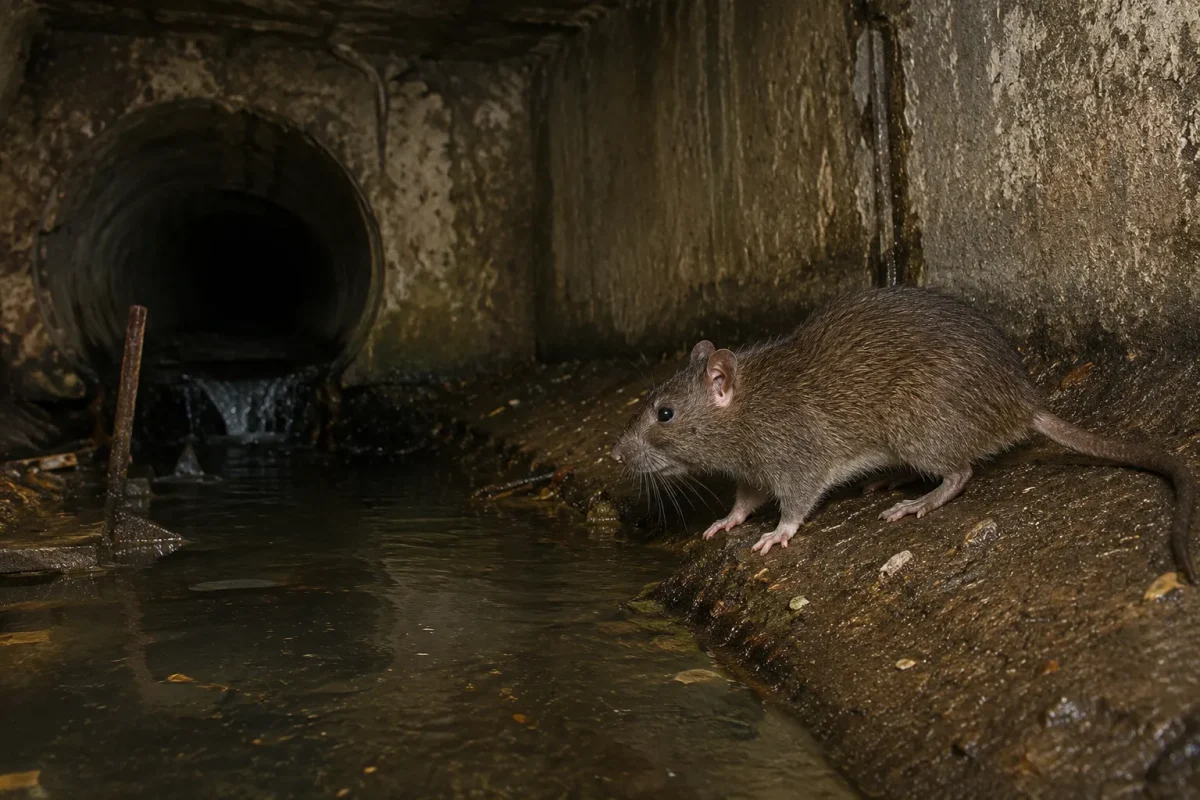
Norway Rat
The largest commensal rat in Singapore. Found in sewers, drains, ground-level burrows and building perimeters. A strong swimmer and burrower — commonly enters buildings via drainage systems or gaps in foundations.
- Body length 180–255mm; weight up to 500g
- Blunt snout, small ears, short scaly tail
- Prefers ground level — burrows beneath structures
- Carries Leptospirosis, Salmonella, Rat Bite Fever
- Control: perimeter bait stations, burrow treatment, exclusion
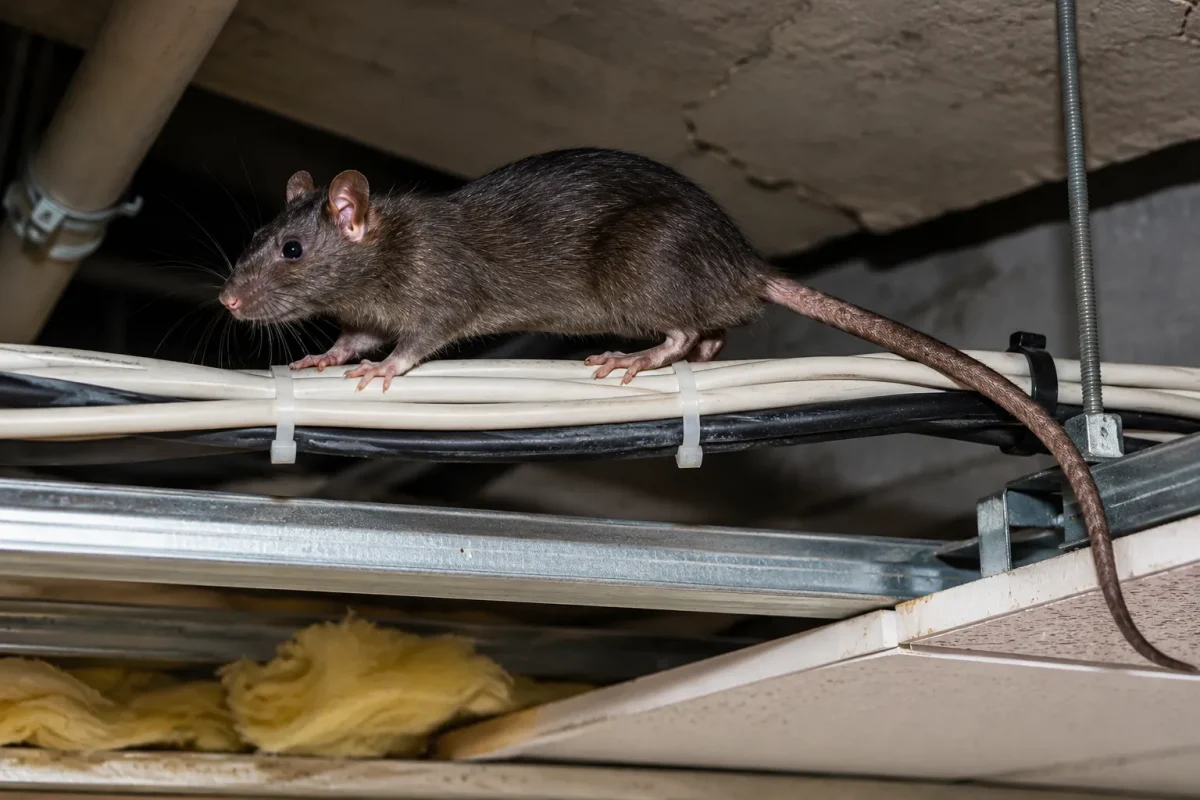
Roof Rat
The most agile rat in Singapore — an excellent climber found in false ceilings, roof spaces, wall cavities and upper floors. Commonly enters via tree branches, pipes and cable trays that contact the building envelope.
- Body length 150–200mm; weight 100-300g
- Pointed snout, large ears, tail longer than body
- Nests high – false ceilings, insulation, wall voids
- Carries Hantavirus, Typhus, Salmonella
- Control: glue traps in ceiling voids, snap traps, exclusion if roof access
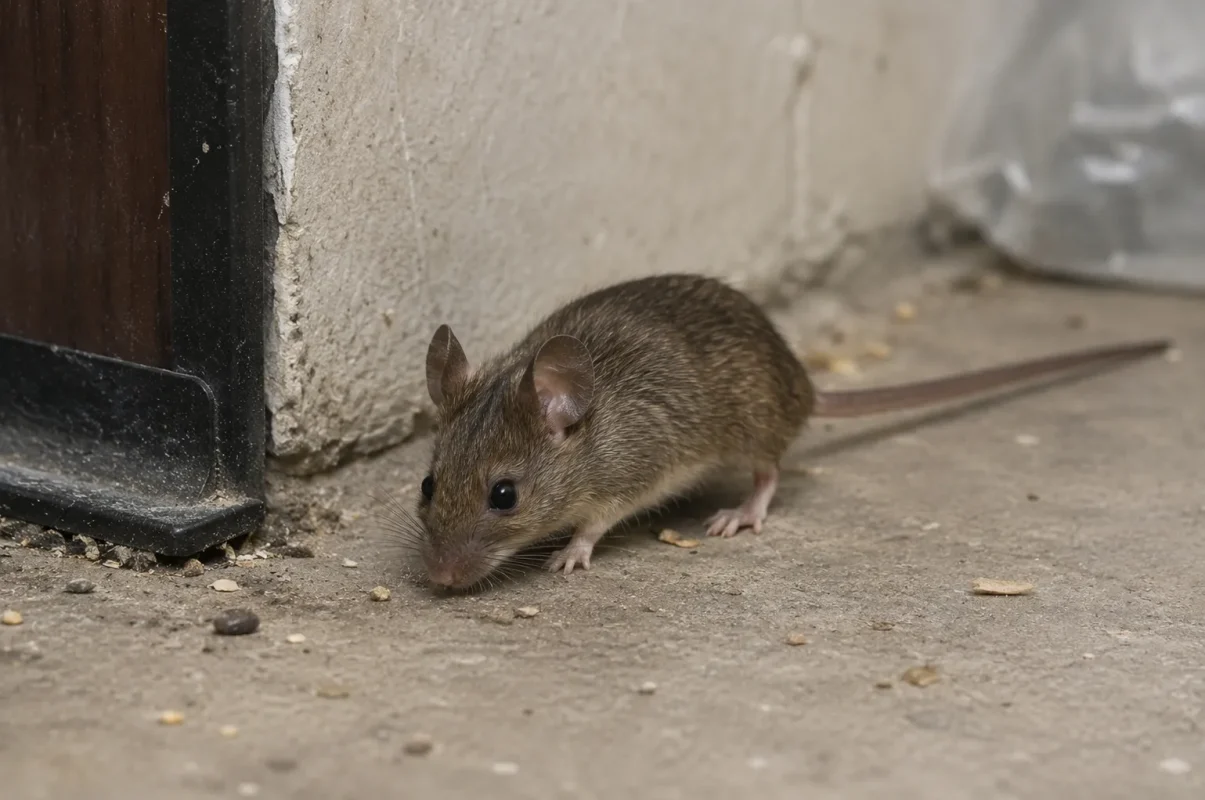
House Mouse
The fastest-reproducing commensal rodent. A female mouse can produce 5–10 litters per year with 6–8 pups per litter. Can squeeze through gaps as small as 6mm — making exclusion especially demanding in older buildings.
- Body length 75-100mm; weight 12-30g
- Large ears relative to body, thin tail
- Thrives indoors — kitchens, pantries, false floors
- Carries Salmonellosis, Hantavirus, Rickettsia
- Control: multiple snap traps, thorough gap-sealing, monitoring
Our methodology
Green Garden's 4-Step Rodent Control Process
A structured, evidence-based approach that eliminates the current infestation and prevents re-entry. Every step is documented for your NEA and SFA compliance records.
Full site inspection with flashlight, notes or checklist
Supports Step 01 and makes the process feel more professional.
Entry point sealing using mesh, sealant or hardware fix
Droppings & Urine Stains
Our NEA-licensed technician conducts a full indoor and outdoor survey, covering:
- Species identification via droppings, rub marks and gnaw patterns
- Infestation level assessment and colony size estimation
- Outdoor landscaped zones, drainage and perimeter harborage
- Entry point mapping — gaps, pipes, cable trays, tree access
- Food source and waste management factors
Entry Point Sealing & Exclusion
Eliminating access routes is as important as eliminating rodents. We identify and seal:
- Gaps as small as 6mm using steel mesh and scupper plugs
- Pipe penetrations and conduit openings
- Damaged drain covers and sewer access points
- Tree limb and cable tray contact with building envelope
- Recommendations for vegetation clearance and ground cover management
Targeted Treatment
Treatment is species-specific and location-appropriate, deploying:
- Tamper-proof bait stations (NEA-compliant) along perimeter and runways
- Food-grade baits in F&B and food-sensitive environments (SFA standard)
- Snap traps and indoor glue boards in ceiling voids for Roof Rats
- Tracking powder and burrow treatment for Norway Rat colonies
- Electrocution traps where appropriate for sensitive indoor areas
- Outdoor glue traps minimised per NEA’s May 2025 guidelines — snap traps and tamper-proof bait stations used as primary outdoor method
Monitoring & Follow-Up
We return within 14 days — included in every treatment — to:
- Inspect trap results and bait consumption data
- Reset or reposition stations based on rodent activity
- Document outcomes for NEA and SFA compliance records
- Provide a written assessment and preventive recommendations
- Propose ongoing monthly/quarterly contracts where warranted
Integrated FM:
The approach pest-
only companies can't
replicate
WHY GREEN GARDEN
40 Years. One Integrated Team.
Green Garden was founded in Singapore in 1985. In four decades, we have grown into an integrated facilities management company — pest control, landscaping, cleaning and M&E under one roof, one team, one accountability chain.
For rodent control, this integration is a decisive advantage. Singapore’s tropical landscape — dense ground cover, drip-irrigated planters, compost zones and mature tree canopies along building perimeters — creates extensive outdoor harborage that feeds indoor infestations. NEA’s own 2025 data confirms most rat burrows are found in public housing estates and industrial areas — exactly the environments our landscaping division monitors daily.
NEA-Licensed Since 1985
Continuous NEA Pest Control Operator licensing for over four decades. Full compliance documentation issued with every treatment.
Outdoor Harborage Expertise
Our landscaping team identifies rat burrows, nesting shrubs and ground cover risk zones that pest-only companies miss on standard inspections.
SFA-Ready Pest Control Records
For F&B premises, we provide the documented treatment records and reports required for Singapore Food Agency audits and licensing renewals.
Closed-Loop Prevention
Rodent prevention becomes part of your facility management cycle — not a one-off callout. Integrated with your cleaning and landscaping schedule.
Who we serve
Rodent Control Across All Commercial Sectors
Every industry faces different risk profiles, regulatory obligations and operational constraints. Green Garden’s programmes are tailored accordingly.
F&B back-of-house, kitchen or food prep service area
Warehouse, loading bay or industrial perimeter inspection view
Commercial office façade or managed property common area
Droppings & Urine Stains
Singapore’s highest-risk category. We use food-grade baits, sealed-unit trapping and produce SFA-compliant documentation. Treatment designed around operating hours to minimise disruption.
Industrial & Manufacturing
Factories and warehouses in Jurong, Tuas and Woodlands face high rodent pressure due to loading docks, outdoor storage and dense vegetation along perimeters. Monthly contract programmes recommended.
Commercial Offices & Grade-A Buildings
Discreet, minimal-disruption treatments for office environments. We work around business hours and provide treatment plans that satisfy building management NEA inspection requirements.
Hotels & Serviced Apartments
Reputation-critical environments require discreet, guest-safe treatment methods. We coordinate access with housekeeping schedules and provide full documented records for SATS audits.
Schools, Institutions & Government
Child-safe treatment protocols using tamper-resistant stations positioned out of reach. Compliance with MOE and NEA guidelines. Documentation available for government audit requirements.
Condominiums & Residential Complexes
MCST and property management contracts covering common areas, bin centres, carparks and landscaped grounds. Integrated with estate cleaning and landscaping programmes.
Common questions
Rodent Control FAQ
How long does a rodent control treatment take in Singapore?
Is rodent baiting safe around children and pets?
Do you offer ongoing rodent management contracts?
How much does rodent control cost in Singapore?
Can rodents enter through landscaped or outdoor areas?
Do I need an NEA-licensed company for rodent control in Singapore?
What are the signs of a rat infestation I should look for?
Don't Wait for the Infestation to Grow
A single pair of rats can produce hundreds of offspring within a year. Contact Green Garden today for a free site inspection and same-day response across Singapore.
Looking for protection from other Singapore pests? See also: termite control | mosquito control.